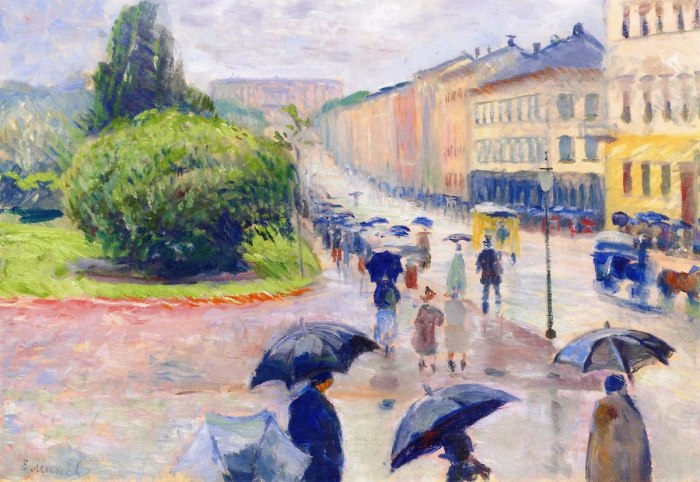
Rainiest year of my life

In the rainiest year of my life
It’s hard to believe I did not shed a tear…

Enough flood I should say
This sky needs no weepers
It mourns every day

Not one single drop
Have I cried on my own
The rain wouldn’t stop

Enough soak for this year
What is the point
Of adding tears ?

We’ve had a moist winter
Then a wet spring
And a humid summer
To match the autumn stream…

In the rainiest year of my time
It must be hard to believe
I could not shed a tear

Not even a sob
Have I spent over you
Or my departed friend
Or the world in flames
Over this age insane

When it feels too obvious
As you look by the window
Is there even room for sorrow ?

In the rainiest year of my life
According to my senses
And the weather statistics
We must be plenty
For whom the same sky
Yet speaks so directly
And should incline to cry

But I’m saving my tears
For the sunniest years
When I’ll see bright and clear.

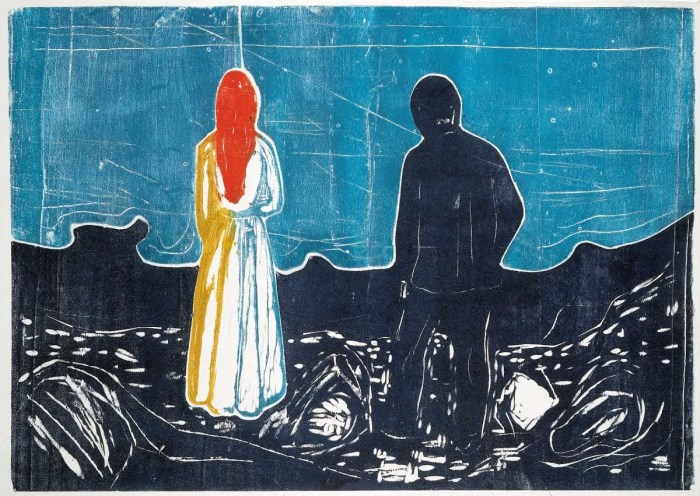
(Painting by Edvard Munch)

Every second lives on.


Every second lives.
Every second lives on.
Even when you think,
When you feel it’s gone
Every slice of time,
Out there is alive.

What if we considered the passing of our present
As a non-evolving process in fact…
While we are supposed to revive the moment
Purely by recollection, through memories.
But what if the human conscience
Was simply unable to treat more
Than a small portion of chronology,
And we had mentally adapted our limitation
By counting seconds, minutes, hours, days,
As a « lost forever » mechanism… ?
When in truth,
At least theorical,
Time is a whole.
And every year, decade, or century,
Happens simultaneously.

As if by self-preservation,
We had invented this past and future
To keep our minds from exploding
In a saturation of data,
And it’s a common ancestral denying
We share for the sake of the greatest illusion ever seen :

Humankind…
Life and death
Before and after
Memories and prospects
Coming from, moving to…

But every second lives on.
Whenever you mourn a dear and hurtful memory,
And you can feel it almost back in your present,
It’s just that it never died actually.

And the best or worst moments of your life,
Instead of filling a rather closed file
Upon the shelves of your brains,
Remain as a full and constant reality.

Without this so-called perception of time,
We’d go crazy.
Still, what if you’d rather go mad,
And let yourself be flooded entirely
With all you ever lived and will live ;
Wouldn’t it seem quite a better fate,
Than forever mourning the few seconds you regret ?

(Painting by Edvard Munch)

Hobo

What makes a man seem more like a hobo ?
What first impression of him who you don’t know ?

Is it the clothing, the hair, the face,
Or his backpack ?
When you may not see him beg,
What tells you of his lacks ;
If he’s using both his legs
And isn’t truly marked… ?

Is it the walking, the look, the pace,
Or his manners ?
When you may not see him stand,
As we mostly pass him by,
And not waving up his hand
At one with a suit and tie…

What makes a man seem more like a hobo,
What observation, clear, that will lead you to know ?

He was sitting on the terrasse yesterday,
Sunburned in a too obvious way
Still you’re never quite sure he’s a vagrant

Now he’s staying on a bench, at a length away
Is that how he looks a little more astray ?
But you’re never that sure he’s so errant

What makes a man seem more like a hobo ?

I realize he’s not talking over his phone
Yet his expression tells you so
He has that conversation all alone
At least the sign of a life weirdo
Or only what it seems from my window…
And who’s the guy, I wish I’ll never know.

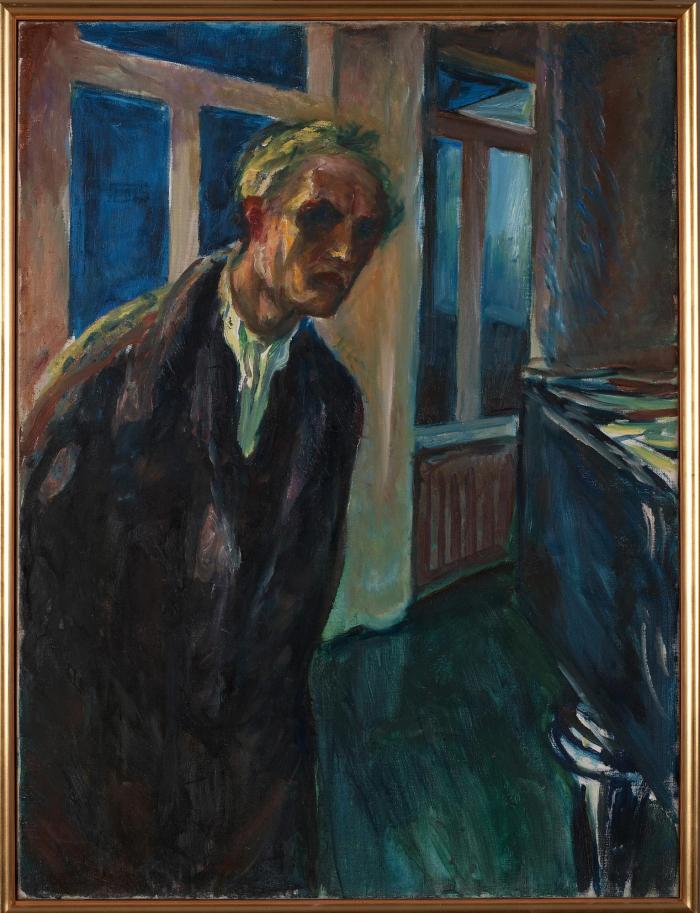
(Painting : Edvard Munch « The night wanderer »)

L’immuable.

Lovers-Man-and-Woman-I-Egon-Schiele-oil-painting

Laisser agir l’anthropologie,
Venir d’elle-même, tirer profit.
Commander puis s’asseoir, attendre,
Voilà, elle se produit.

Le dispositif est simple,
L’expérience, libre :
Un verre, un feutre, un calepin,
Sinon un livre.
Ou même à nu peut-être,
Sans le moindre effet.
L’étrangeté suffit.
La présence induit.

Par œuvre de curiosité ou vœu de confession,
Besoin irrépressible de faire intrusion.
Le rapport humain décide
En qui reçoit et qui émet.
Qui prend sur soi, et qui tout près s’assied.

Rendre pouvoir à la nécessité.
Qu’elle nous livre au hasard,
À flux d’actes manqués.
Choisir un point aléatoire,
Sans rendez-vous précis ;
Une connaissance arrive, ou nous a précédé :
Quel est ce cheminement d’où surgit l’improviste,
Improbable enchaînement ou franc déterminisme ?

Il faut donc ce prétexte, insignifiant
_ courrier ou simple achat,
À sortir un bagage
Éprouvé bien plus lourd.
On ne s’attendait pas,
On se découvre, même.
Et le porteur importe peu,
Tout confident ferait l’affaire.
Ou s’il apporte davantage,
En être « élu », plie à sa tâche.
On ne fuit pas nécessité,
On en devient l’habitué.

Rendre son règne à l’ancestral.
Endosser contre-emploi
D’être un esprit moderne
En butte à d’autres lois.
Bien sûr on voudrait surpasser
Sa condition humaine, évoluer
Vers idéale espèce,
Autant muer.

Mais l’immuable opère,
Et se déjoue de tout progrès.
Sa preuve est quotidienne,
Au moindre vide il se recrée.

Instinct de rendre corps à l’animal.
Assumer d’être encore un peu tribal.

Se laisser désigner par intuition,
Vision de l’extérieur ou flair,
On se dévoile en intentions.

Nous laisser peindre en proie peut-être,
Hâter le sort qui nous désigne,
Quand chaque instant y prédestine.

À condition première en ce statut,
De n’être agi qu’envers plus dépourvu.
Que son besoin ne l’autorise à prédation,
À croire un sacrifice aimable incitation.

Peut-on se refuser victime et ne vivre en chasseur ;
Cueillir ainsi l’intime, exempt d’en être possesseur ?

Laisser régner l’ordre des choses,
À clairvoyance humanisée.

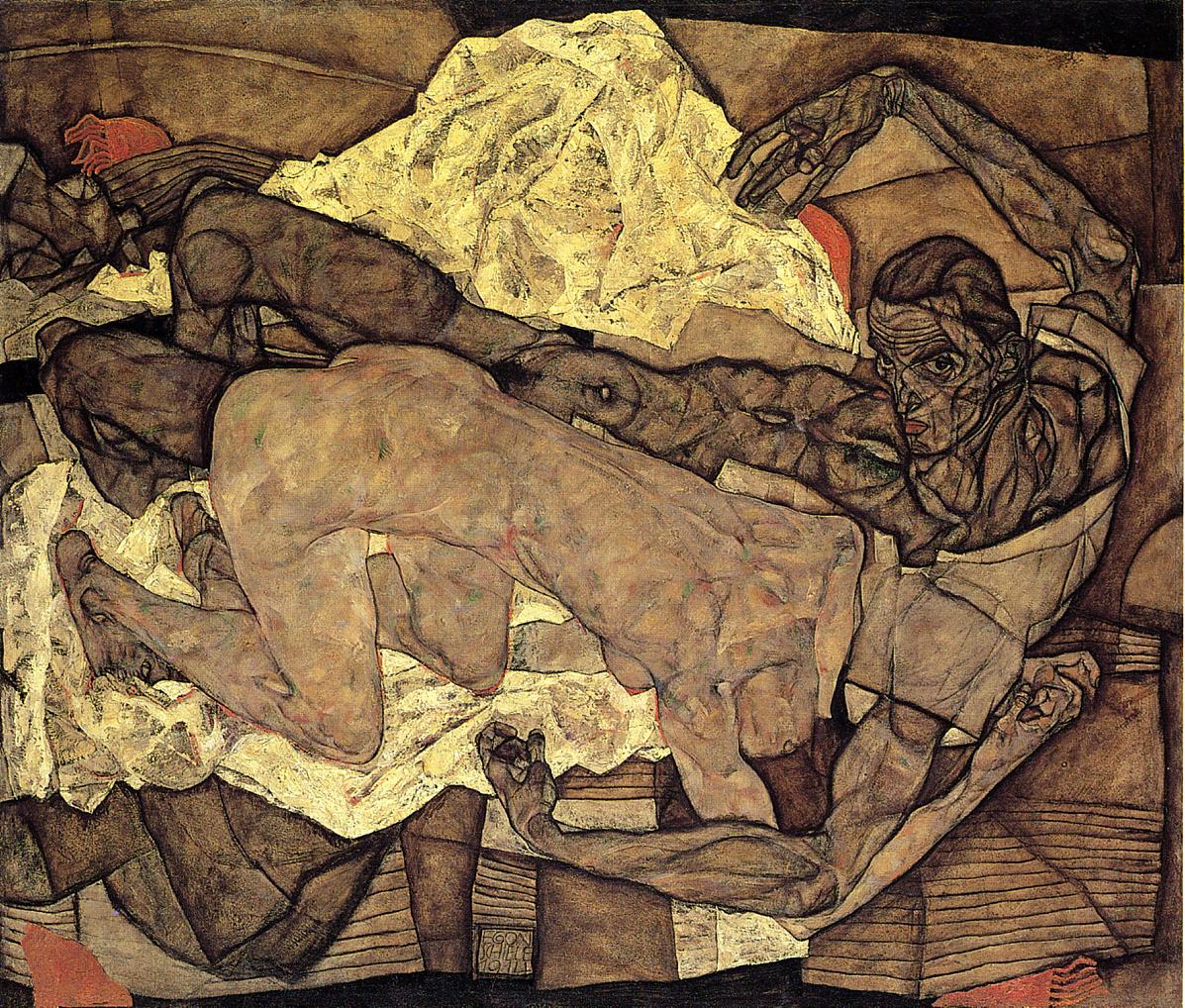
(Tableau : Egon Schiele – « Lovers  Man and Woman »)
 

« Merci d’être vivant. »

Edvard_Munch_-_Eye_in_Eye_-_MM.M.00502_-_Munch_Museum

Ne rien faire en particulier,
Autre que d’en faire trop.
Pourquoi devrais-je esprit relier
À ce jour en fardeau ?

Sachons plutôt ne rien changer
Qui s’offre à l’inertie.
On encourt un plus grand danger
À céder au sursis.

N’attendre aucun présent du ciel
Ou promesse en repos.
M’éclaire, aussi providentiel,
Un gratifiant propos :

Simple « merci d’être vivant »,
Surprends-je à mon égard.
Hommage inescompté, souvent,
Ne tient qu’au gré d’un soir.

Et s’il faut trouver récompense,
Ou d’un répit, bienfait,
Me savoir utile évidence,
A bien meilleur effet.

N’avertir au calendrier
Qu’être fidèle à soi.
Tiens-je au rappel à l’encrier
Qu’un temps j’eus prime espoir ?

Au prix d’un long soupir adulte,
Ai-je à répliquer « non ».
À d’autres, bonheur et son culte :
Enfant, m’astreint ton nom.

S’il me faut trouver réjouissance,
Un pas plus loin suffit.
N’éprouvez dans ma réticence
Aucun blâme ou défi.

Combien verraient mieux s’en passer,
Ont fausse exaltation.
Prenant sur eux de ne froisser
Chez d’aucuns, tradition ?

Combien s’abîment au point d’ancrage
Où l’ordre s’établit.
Eux n’ont que solitude et rage,
À battre en ce repli.

Ne rien faire en particulier,
Si blanchir un tableau,
Seul en cette occasion dédiée
Vaut à demain sanglot.

N’attendre aucun présent du ciel,
Et plus que tout repos,
Doux mot résonne existentiel
À qui tend son chapeau.

« Merci d’être vivant »,
Comprends-je à ce regard.
Hommage étreint souvent
De vibrer un peu tard.

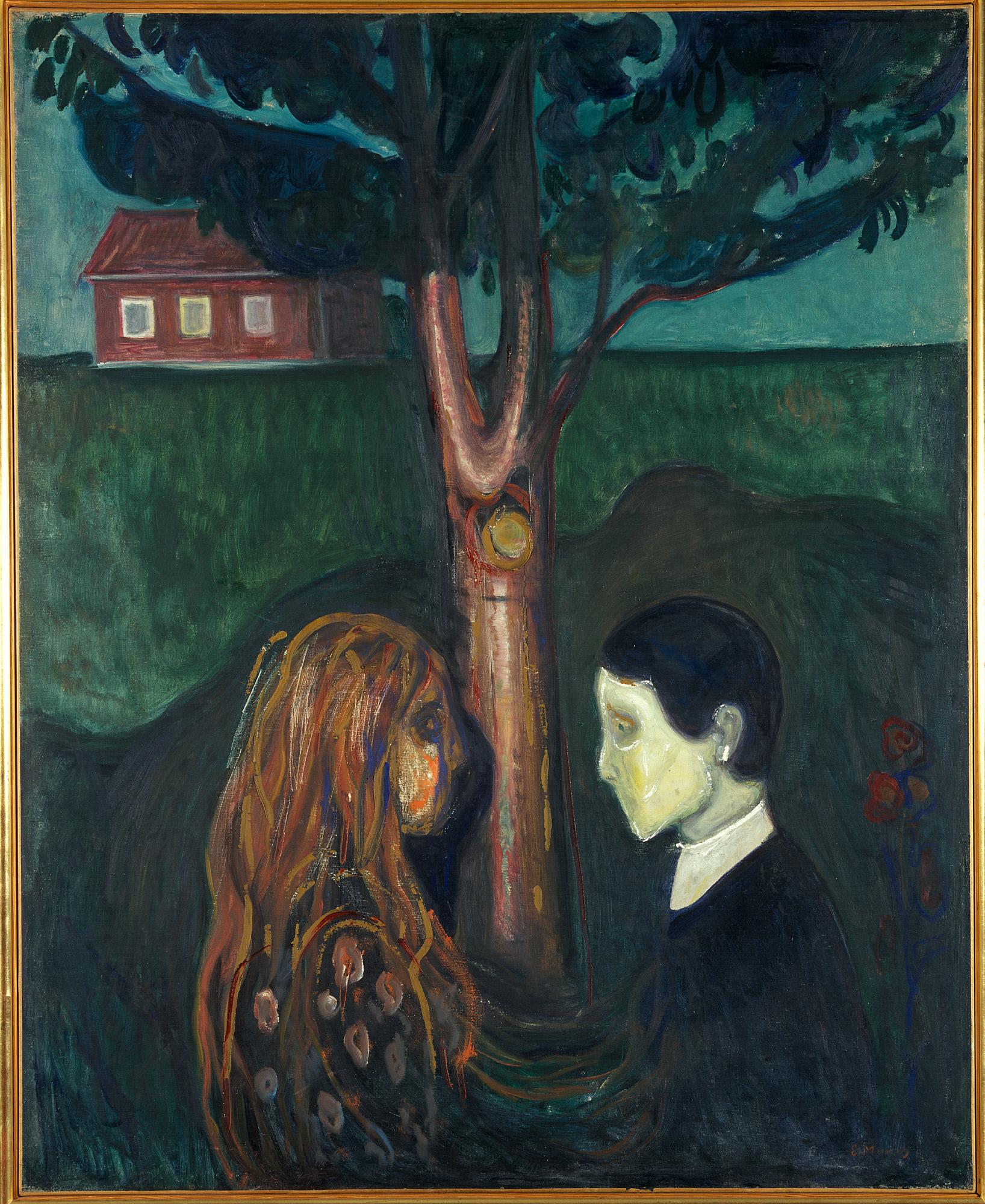
(Tableau : Edvard Munch – « Eye in eye »)

(do not show) The OK version of yourself

Portrait-of-George-Dyer

The OK version of a song is never satisfying.
When you bring the effort in not screwing it up
Instead of wanting the song to be greater,
That’s playing defensive, that’s playing too modest.

Don’t be modest by the way.
If you avoid being pretentious too obviously,
It’ll always look, feel, or sound a bit restrained.

And the OK version of that song
Becomes a revealing feature
Of how you live your own life,
Scheme your plans, aim the next border, the next chapter,
Trying so hard not to fail
That you never succeed in the end.

If you deliver that OK version of yourself to the world,
Don’t expect any bigger consideration.
The world is not a secret talent searcher.
For better and often worse,
It only pays attention to an edge at the moment,
To a movement or idea so undeniable they can’t wait.
It only shows interest for greatness and stupidity,
Beauty and horror,
Naked truth and gross lies.

Oh wait,
Let’s be fair,
There’s another hook actually.
Being awkward, special, unusual, unexpected…
Yet not in a shy way :
See, you can’t just be weird on your own,
It has to mean something.

And it’s not « OK »
It’s not « alright ».
It’s you.

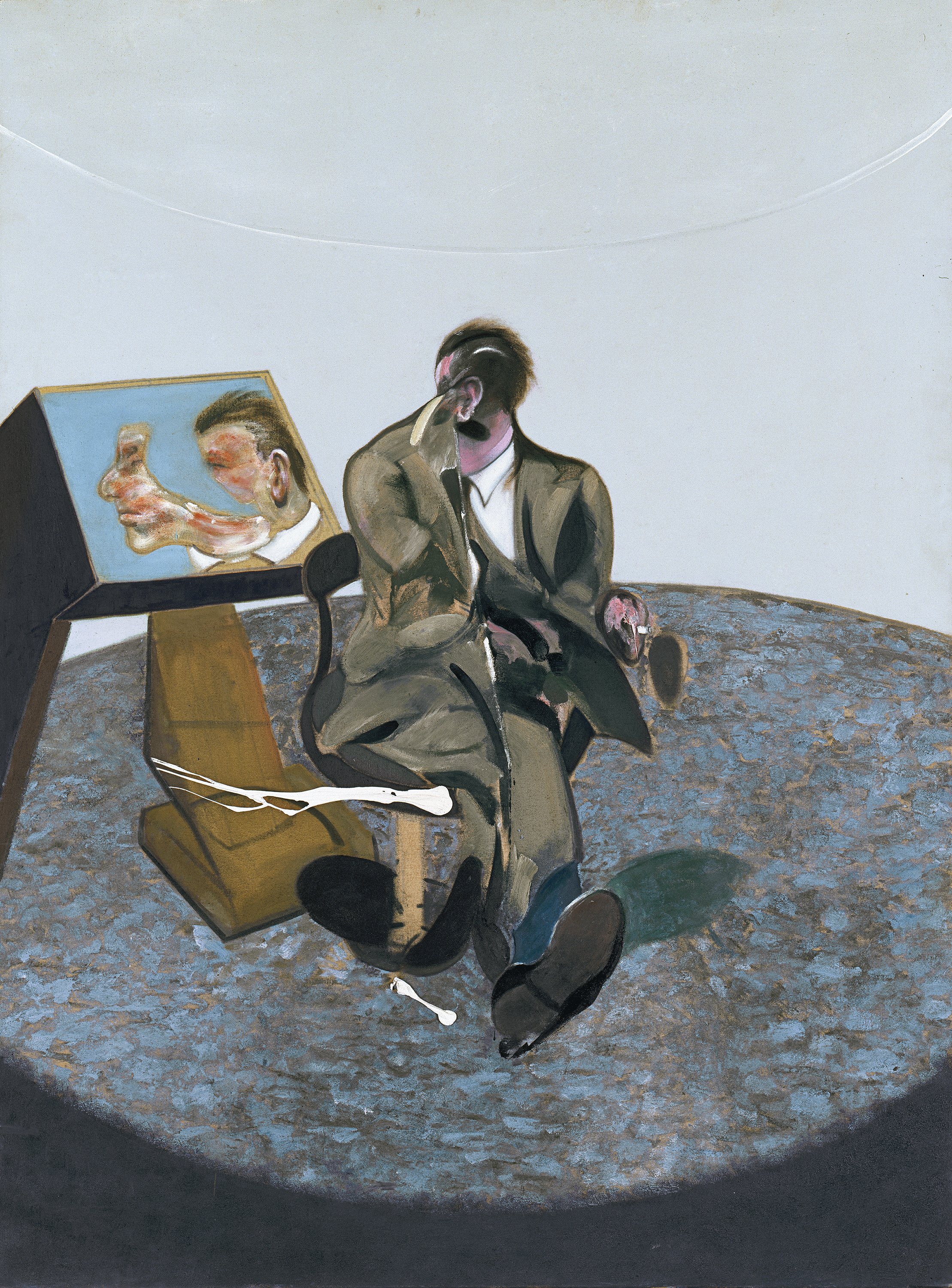
(Painting by Francis Bacon – « Portrait of George Dyer »)

(Être) une page sans fin

Edward-hopper_compartimentC

Tu voudrais que cette page en vienne à tourner seule…
Et tienne au vent léger d’apprêter son linceul.
À peine un courant d’air, aussitôt le rabat,
_ Quand c’était juste hier, du pli sur nos ébats.

Tu voudrais que dette passe, au premier chant du deuil.
Empreintes à effacer : mieux, retourner la feuille.
On prie bas de se taire un si proche au-delà,
Oraison reste à faire, en sourdine à ce glas.

Mémoire insiste, où vision cesse.
Aucun repos n’éteint la cendre…
Émoi résiste au train qui presse,
Un dernier mot, freinez cassandres…

Il te siérait de n’être otage ainsi d’un autre cœur…
Et ce volet d’histoire en essuie ta rancœur,
À redonner sa chair au cordon ceint d’éclats,
D’une antérieure affaire insoumise au trépas ?

Feindrais-tu que cette page oscille en ta main seule,
Et vienne à ton regret d’en arracher le seuil…
Aimé.e, crois-tu défaire en parenté deux âmes ?
Apprends qu’un jet de terre n’a su courber la flamme.

(Tableau : Edward Hopper – « Compartiment C, Voiture 293 »)